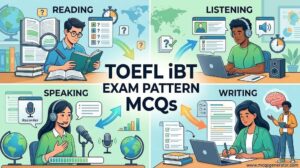
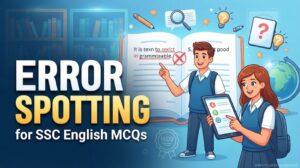
Although the TOEFL iBT exam does not feature an isolated multiple-choice grammar section, grammatical precision, syntactic variety, and structural control are rigorously evaluated across the Writing and Speaking sections under “Language Use.” Test-takers frequently lose critical points due to systemic errors in subject-verb agreement, inappropriate tense sequences, dangling modifiers, article omissions, and incorrect preposition collocations. Achieving an advanced score requires eliminating frequent structural errors while demonstrating a sophisticated command of complex sentence constructions tailored for academic contexts.
1. Neither of the students __________ the answer to the complex equation.
Correct Answer: b) knows
Explanation:
In formal English grammar, 'neither of' followed by a plural noun takes a singular verb.
2. A number of candidates __________ waiting outside the interview room.
Correct Answer: b) are
Explanation:
The phrase 'a number of' acts as a quantifier meaning 'several' or 'many' and takes a plural verb. 'The number of' takes a singular verb.
3. The number of applications we received this year __________ lower than expected.
Correct Answer: a) is
Explanation:
The phrase 'the number of' refers to a specific, singular quantity and therefore takes a singular verb.
4. Not only the manager but also the employees __________ excited about the new project.
Correct Answer: c) are
Explanation:
With correlative conjunctions like 'not only... but also', the verb must agree with the subject closest to it (the employees).
5. Every one of the shirts __________ a different pattern.
Correct Answer: a) has
Explanation:
The subject of the sentence is 'every one', which is singular and requires the singular verb 'has'.
6. The furniture in those showrooms __________ extremely expensive.
Correct Answer: c) is
Explanation:
'Furniture' is an uncountable noun in English and always takes a singular verb.
7. Mathematics __________ always been my favorite subject in high school.
Correct Answer: a) has
Explanation:
Nouns ending in '-ics' like mathematics, physics, and economics are singular and take singular verbs.
8. There __________ a pen and two notebooks on the desk.
Correct Answer: a) is
Explanation:
In 'there is/there are' constructions with a compound subject, the verb agrees with the first noun in the list ('a pen', which is singular).
9. One of the most important reasons for his success __________ his dedication.
Correct Answer: b) is
Explanation:
The core subject is 'One', which is singular. The prepositional phrase 'of the most important reasons' does not change the subject's number.
10. The committee __________ finally reached a decision after hours of debate.
Correct Answer: b) has
Explanation:
Collective nouns like 'committee' take a singular verb when the group acts as a single unit.
11. By the time the police arrived, the burglar __________ the scene.
Correct Answer: c) had left
Explanation:
The past perfect tense ('had left') is used to describe an action that was completed before another action in the past ('arrived').
12. I __________ in this city since I graduated from college.
Correct Answer: c) have been living
Explanation:
The present perfect continuous is used to describe an action that started in the past ('since I graduated') and continues into the present.
13. It is high time you __________ studying for your final exams.
Correct Answer: b) started
Explanation:
The phrase 'it is high time' is followed by a subject and a verb in the past tense to indicate something that should be done immediately.
14. Next month, they __________ married for twenty years.
Correct Answer: c) will have been
Explanation:
The future perfect tense ('will have been') is used to express an action or state that will be completed by a certain time in the future.
15. I __________ my breakfast when the doorbell rang.
Correct Answer: c) was eating
Explanation:
The past continuous ('was eating') is used to describe an ongoing past action that was interrupted by a sudden event ('the doorbell rang').
16. The professor said that he __________ the assignments by Friday.
Correct Answer: b) would return
Explanation:
In reported speech, if the reporting verb is in the past ('said'), the modal 'will' changes to 'would'.
17. I can't find my keys. I must __________ them at the office.
Correct Answer: c) have left
Explanation:
The structure 'must have + past participle' is used to express a strong logical deduction about a past event.
18. She usually __________ to the gym on Mondays, but today she is resting.
Correct Answer: b) goes
Explanation:
The present simple ('goes') is used for habitual actions or routines, often signaled by words like 'usually'.
19. Look at those dark clouds! It __________ rain.
Correct Answer: b) is going to
Explanation:
'Is going to' is used to make predictions based on present evidence (the dark clouds).
20. I __________ never visited Paris, but I hope to go there someday.
Correct Answer: a) have
Explanation:
The present perfect ('have visited') with 'never' is used to talk about life experiences up to the present moment.
21. She is __________ most intelligent student I have ever met.
Correct Answer: c) the
Explanation:
The definite article 'the' must be used before superlative adjectives like 'most intelligent'.
22. He considers himself to be __________ honest man.
Correct Answer: b) an
Explanation:
The choice between 'a' and 'an' depends on sound. 'Honest' begins with a vowel sound (silent 'h'), so 'an' is required.
23. We went to __________ Alps for our winter vacation.
Correct Answer: c) the
Explanation:
The definite article 'the' is used before the names of mountain ranges.
24. Can you give me __________ information about the upcoming seminar?
Correct Answer: c) some
Explanation:
'Information' is an uncountable noun in English. It cannot be preceded by 'a' or 'an'. 'Some' is appropriate.
25. My brother plays __________ piano beautifully.
Correct Answer: c) the
Explanation:
The definite article 'the' is used when referring to playing musical instruments.
26. She graduated from __________ university in California.
Correct Answer: a) a
Explanation:
'University' starts with a consonant sound ('yoo'), so it takes the article 'a', not 'an'.
27. The government should do more to help __________ poor.
Correct Answer: c) the
Explanation:
The structure 'the + adjective' (the poor, the rich) is used to describe a whole group or class of people.
28. There are __________ people attending the conference this year than last year.
Correct Answer: b) fewer
Explanation:
'Fewer' is used for countable nouns (people), while 'less' is used for uncountable nouns.
29. I need to buy __________ bread on the way home.
Correct Answer: b) a loaf of
Explanation:
'Bread' is uncountable. To refer to a single unit, we use a measure word like 'a loaf of' or 'a piece of'.
30. They crossed __________ Pacific Ocean on a small sailboat.
Correct Answer: c) the
Explanation:
Names of oceans and seas require the definite article 'the'.
31. She is very interested __________ learning how to code.
Correct Answer: a) in
Explanation:
The adjective 'interested' is always followed by the preposition 'in'.
32. He was accused __________ stealing the confidential documents.
Correct Answer: c) of
Explanation:
The verb 'accuse' is always followed by the preposition 'of'.
33. I would like to congratulate you __________ your recent promotion.
Correct Answer: b) on
Explanation:
The verb 'congratulate' takes the preposition 'on' when referring to an achievement.
34. The new committee consists __________ five members.
Correct Answer: d) of
Explanation:
The verb 'consist' is strictly followed by the preposition 'of'.
35. Whether we go to the beach tomorrow depends __________ the weather.
Correct Answer: b) on
Explanation:
The verb 'depend' is always followed by the preposition 'on'.
36. I apologize __________ being late to the meeting.
Correct Answer: a) for
Explanation:
When apologizing for an action, the correct preposition is 'for', followed by a noun or gerund.
37. His management style is very different __________ his predecessor's.
Correct Answer: b) from
Explanation:
In standard formal English, the adjective 'different' is followed by 'from'.
38. This new model is vastly superior __________ the older version.
Correct Answer: b) to
Explanation:
Adjectives ending in '-ior' (like superior, inferior, junior, senior) are followed by 'to', not 'than'.
39. She is exceptionally good __________ solving complex puzzles.
Correct Answer: b) at
Explanation:
To describe proficiency or skill, the correct preposition to use after 'good' or 'bad' is 'at'.
40. They have been waiting for the bus __________ three hours.
Correct Answer: b) for
Explanation:
'For' is used to indicate a duration or period of time (e.g., three hours). 'Since' is used for a specific starting point.
41. I really enjoy __________ literature in my free time.
Correct Answer: b) reading
Explanation:
The verb 'enjoy' must be followed by a gerund (-ing form), not an infinitive.
42. They decided __________ the meeting until next week.
Correct Answer: c) to postpone
Explanation:
The verb 'decide' is always followed by a full infinitive (to + verb).
43. You should avoid __________ sugar if you want to lose weight.
Correct Answer: c) eating
Explanation:
The verb 'avoid' must be followed by a gerund (-ing form).
44. Would you mind __________ the window? It's getting cold.
Correct Answer: c) closing
Explanation:
The expression 'would you mind' is followed by a gerund.
45. He stopped __________ a coffee on his way to work.
Correct Answer: a) to buy
Explanation:
'Stop to buy' means he halted his journey in order to buy coffee. 'Stop buying' would mean he quit purchasing coffee altogether.
46. I am not used to __________ up so early in the morning.
Correct Answer: b) waking
Explanation:
The structure 'be used to' is a prepositional phrase, so it must be followed by a noun or a gerund (-ing).
47. This museum is definitely worth **.
Correct Answer: b) visiting
Explanation:
The adjective 'worth' is characteristically followed by a gerund.
48. The suspect denied __________ the money from the safe.
Correct Answer: c) taking
Explanation:
The verb 'deny' is followed by a gerund, not an infinitive.
49. We somehow managed __________ the project before the deadline.
Correct Answer: b) to finish
Explanation:
The verb 'manage' is followed by an infinitive (to + verb).
50. I am looking forward to __________ you at the conference.
Correct Answer: b) seeing
Explanation:
In the phrase 'look forward to', the word 'to' is a preposition, so it must be followed by a gerund (-ing) or a noun.
51. If it rains tomorrow, we __________ the picnic.
Correct Answer: b) will cancel
Explanation:
This is a First Conditional sentence, describing a real future possibility. The structure is: If + present simple, will + base verb.
52. If I __________ the lottery, I would travel the world.
Correct Answer: c) won
Explanation:
This is a Second Conditional sentence, describing a hypothetical present/future situation. The structure is: If + past simple, would + base verb.
53. If she had studied harder, she __________ the exam.
Correct Answer: c) would have passed
Explanation:
This is a Third Conditional sentence, describing an unreal past situation. The structure is: If + past perfect, would have + past participle.
54. If I had eaten breakfast, I __________ so hungry right now.
Correct Answer: a) would not be
Explanation:
This is a Mixed Conditional, mixing an unreal past action (had eaten) with an unreal present result (would not be).
55. ** I known about the meeting, I would have attended.
Correct Answer: b) Had
Explanation:
This is an inverted Third Conditional. 'Had I known' is the formal equivalent of 'If I had known'.
56. You will fail the course __________ you submit your final project.
Correct Answer: b) unless
Explanation:
'Unless' means 'if not'. The sentence means 'You will fail if you do not submit your final project'.
57. You can borrow my car __________ you bring it back by midnight.
Correct Answer: c) provided that
Explanation:
'Provided that' means 'on the condition that', making it the logical connector here.
58. I wouldn't eat that food __________ they paid me a million dollars.
Correct Answer: b) even if
Explanation:
'Even if' emphasizes that a particular condition does not matter and will not change the outcome.
59. __________ I the CEO, I would implement stricter environmental policies.
Correct Answer: c) Were
Explanation:
This is an inverted Second Conditional. 'Were I' replaces 'If I were', which is the grammatically correct subjunctive form.
60. __________ your timely intervention, the company would have gone bankrupt.
Correct Answer: b) But for
Explanation:
'But for' is a formal prepositional phrase meaning 'if it had not been for', commonly used in conditional contexts.
61. The scientist __________ discovered the new compound won a Nobel Prize.
Correct Answer: b) who
Explanation:
The relative pronoun 'who' is used as the subject of the relative clause when referring to people.
62. The book __________ I borrowed from the library is due tomorrow.
Correct Answer: c) which
Explanation:
'Which' (or 'that') is used as the relative pronoun for things or objects.
63. That is the student __________ backpack was stolen yesterday.
Correct Answer: d) whose
Explanation:
'Whose' is a possessive relative pronoun indicating ownership (the backpack belonging to the student).
64. The hospital __________ I was born has been demolished.
Correct Answer: b) where
Explanation:
'Where' is the correct relative adverb to refer to a place. (Alternatively, 'in which' could be used, but not just 'which').
65. He didn't explain the reason __________ he was absent.
Correct Answer: b) why
Explanation:
'Why' is the correct relative adverb to follow the noun 'reason'.
66. To __________ did you address the formal complaint?
Correct Answer: b) whom
Explanation:
'Whom' is the objective form of 'who' and must be used after a preposition like 'to'.
67. My uncle, __________ lives in Australia, is a marine biologist.
Correct Answer: b) who
Explanation:
In a non-defining relative clause (set off by commas), 'who' must be used for people. 'That' cannot be used in non-defining clauses.
68. I still remember the day __________ we first met.
Correct Answer: c) when
Explanation:
'When' is the correct relative adverb used to refer to a time or a day.
69. The scholarship is awarded to anyone __________ meets the academic criteria.
Correct Answer: a) who
Explanation:
'Who' acts as the subject of the verb 'meets' in this relative clause.
70. They bought a vintage car, the engine of __________ needs to be entirely rebuilt.
Correct Answer: b) which
Explanation:
In formal structures indicating possession for objects, 'the [noun] of which' is used.
71. Not only __________ a great singer, but she also plays the piano beautifully.
Correct Answer: b) is she
Explanation:
When a negative or restrictive word (like 'Not only') begins a sentence, the subject and auxiliary verb must be inverted.
72. Never before __________ such a magnificent display of fireworks.
Correct Answer: b) have I seen
Explanation:
Negative adverbial phrases at the beginning of a sentence ('Never before') require subject-verb inversion.
73. The applicant was highly educated, extremely motivated, and __________.
Correct Answer: b) experienced
Explanation:
Parallel structure requires items in a series to have the same grammatical form. The list requires an adjective to match 'educated' and 'motivated'.
74. He enjoys hiking, swimming, and __________.
Correct Answer: c) cycling
Explanation:
To maintain parallel structure, the third item in the list must be a gerund (-ing form) to match 'hiking' and 'swimming'.
75. She bought a __________ table at the antique market.
Correct Answer: c) beautiful old wooden
Explanation:
The standard order of adjectives is: Opinion (beautiful), Age (old), Material (wooden).
76. Hardly __________ the house when it started to pour down rain.
Correct Answer: b) had we left
Explanation:
Sentences starting with 'Hardly' require inversion of the subject and the auxiliary verb.
77. Little __________ about the surprise party we had planned.
Correct Answer: c) did he know
Explanation:
Sentences beginning with the negative adverb 'Little' require subject-verb inversion, using the auxiliary 'did' for past tense.
78. Which sentence has the correct adverb placement?
Correct Answer: b) He always arrives late to meetings.
Explanation:
Adverbs of frequency (always, often, never) are generally placed before the main verb (arrives).
79. Can you tell me where **?
Correct Answer: b) the post office is
Explanation:
In indirect questions, the word order returns to normal (Subject + Verb), and auxiliary verbs like 'do/does' are not used.
80. I wonder what __________ at this exact moment.
Correct Answer: b) she is doing
Explanation:
This is an embedded question. It functions as a noun clause and must follow statement word order (Subject + Verb), not question word order.
81. The counselor gave me a very helpful piece of **.
Correct Answer: c) advice
Explanation:
'Advice' is an uncountable noun. It cannot be made plural ('advices'). 'Advise' is the verb form.
82. The news broadcast on channel five __________ always reliable.
Correct Answer: c) is
Explanation:
Despite ending in 's', the word 'news' is an uncountable singular noun and takes a singular verb.
83. The laboratory recently purchased __________ to conduct the experiments.
Correct Answer: d) a lot of new equipment
Explanation:
'Equipment' is an uncountable noun. It does not take an 's' for plural and cannot be preceded by 'a' or 'many'.
84. The two brothers always support __________ during difficult times.
Correct Answer: b) each other
Explanation:
'Each other' is generally used when referring to two people, while 'one another' is used for more than two (though they are often used interchangeably in modern English, 'each other' is best for two).
85. Be careful with that sharp knife, or you will cut **.
Correct Answer: c) yourself
Explanation:
Reflexive pronouns (yourself) are used when the subject and the object of the verb are the same person.
86. ** are many challenges associated with starting a new business.
Correct Answer: b) There
Explanation:
'There are' is the correct existential structure used to state the existence of something (plural challenges).
87. He didn't answer his phone. He __________ been sleeping.
Correct Answer: a) must have
Explanation:
'Must have + past participle' is used to make a strong, logical deduction about something that happened in the past.
88. You __________ finish the report by 5 PM, or the client will be furious.
Correct Answer: a) had better
Explanation:
'Had better' is a modal phrase used to give strong advice or a warning about a specific present or future situation.
89. Despite the heavy traffic, we __________ arrive at the airport on time.
Correct Answer: b) were able to
Explanation:
To express ability in a specific, successful past situation, 'were able to' or 'managed to' is used instead of 'could'.
90. Excuse me, professor, __________ I leave the classroom for a moment?
Correct Answer: c) may
Explanation:
'May' is the most appropriate and formal modal verb to use when asking for permission.
91. ** the terrible weather, the marathon was not canceled.
Correct Answer: c) Despite
Explanation:
'Despite' is a preposition and must be followed by a noun phrase ('the terrible weather'). 'Although' is a conjunction and requires a full clause.
92. ** it was raining heavily, they decided to go for a hike.
Correct Answer: c) Although
Explanation:
'Although' is a subordinating conjunction that must be followed by a subject and a verb ('it was raining').
93. The project was a massive success; __________, the team did not receive a bonus.
Correct Answer: c) however
Explanation:
'However' is a conjunctive adverb used to introduce a contrasting idea, properly preceded by a semicolon and followed by a comma.
94. The flight was delayed __________ a severe snowstorm.
Correct Answer: b) due to
Explanation:
'Due to' (or 'because of') is a prepositional phrase followed by a noun phrase. 'Because' requires a full subject-verb clause.
95. The groundbreaking novel __________ in 1925 by F. Scott Fitzgerald.
Correct Answer: b) was written
Explanation:
This requires the past simple passive voice (was + past participle) because the action was completed in the past and the subject receives the action.
96. A new hospital __________ in the city center right now.
Correct Answer: c) is being built
Explanation:
The present continuous passive ('is being + past participle') is used to describe an action being performed on a subject at the present moment.
97. This semester's physics course is __________ than the one I took last year.
Correct Answer: b) more difficult
Explanation:
For long adjectives (two or more syllables), the comparative form is made by adding 'more' before the adjective.
98. Of all the planets in our solar system, Jupiter is by far the __________.
Correct Answer: c) largest
Explanation:
When comparing three or more things, the superlative form is used. For short adjectives, add '-est'.
99. The harder you work, the __________ you will become.
Correct Answer: a) more successful
Explanation:
This structure (The + comparative, the + comparative) expresses that two things change together proportionally.
100. This new smartphone is not as durable __________ the older models.
Correct Answer: c) as
Explanation:
To make comparisons of equality or inequality, the correlative conjunction structure 'as ... as' (or 'not as ... as') is used.